Knowing how to connect the pool pump correctly is essential to ensure efficient filtration, avoid pressure losses and prevent electrical or hydraulic breakdowns.
In fact, an improper installation can cause lack of suction, air ingress in the circuit, vibrations, motor overheating, high electrical consumption and electrical risk.
The correct order of the filtration system is: Pool → Skimmer / Bottom → Pump → Filter → Filter → Returns. This order must never be reversed.
The pump should always be installed upstream of the filter, as it is responsible for pumping the water to the filter media.
Having clarified this part, let’s look at the key points to connect the pool pump to the filter.
The pump should be placed as close to the pool as possible, preferably at a lower level than the water to facilitate priming.
In addition, the ideal location is on a stable and level surface and in a ventilated area protected from direct rain.
The piping should be connected from the skimmer and/or bottom. Next, separate valves are installed if there are several lines.
Then, seal threads with suitable Teflon, avoiding sharp bends immediately upstream of the pump. In this way, total watertightness is guaranteed (key to avoid unblocking).
A common mistake when connecting the pool pump is not checking for micro leaks in suction, which generates constant air problems. If that happens, we recommend you read our guide on how to remove air from your pool pump.
The return outlet of the pump is connected to the filter inlet. Compatible fittings (typically 50 mm or 63 mm) are used for this purpose.
Once the connection has been made, it is necessary to check that there is correct alignment to avoid tensions. You should also avoid forcing rigid pipes.
Misalignment when connecting the pool pump to the filter causes vibrations and premature wear of the mechanical seal.
From the filter outlet it is connected to:
This section does not affect priming, but does affect the working pressure.
In addition, if after connection you observe excessive noise, vibrations, loss of pressure, frequent overpriming or overheating, it means that there may be hydraulic misalignment, air in suction, incorrect electrical connection or the pump is insufficient for the volume.
In such cases, it may be necessary to replace the equipment. We invite you to visit PoolComet‘s complete catalog of pool pumps, where you will find models that stand out for their ease of installation and compatibility with standard systems.

The electrical connection of the pool pump must comply with current regulations and must be carried out with adequate protection.
Here we consider it essential to pause and recommend that, if you do not have electrical knowledge, this part should be done by a professional.
The installation must include:
Before connecting, check whether the pump is single-phase (230V) or three-phase (400V).
Next, check the current rating on the nameplate and make sure to use a suitable cable cross-section.
Mains → Control box → Timer (optional) → Pump.
It is advisable to install a timer to optimize filtration hours and consumption.
Before switching on:
Loss of pressure, vibrations, noise and premature wear of the equipment may occur.
Yes. Circuit breaker, differential and grounding are essential.
It is not recommended. It must be protected by a suitable Control box.
It is probably badly primed or there is air intake at suction.
Yes, but it increases the risk of de-priming. Requires perfectly watertight installation.


PoolComet choice
 Select options
This product has multiple variants. The options may be chosen on the product page
Select options
This product has multiple variants. The options may be chosen on the product page

Alkalinity and pH. Discover the importance of the alkalinity of your pool water, how to measure it and what is the right level. PoolComet Blog.
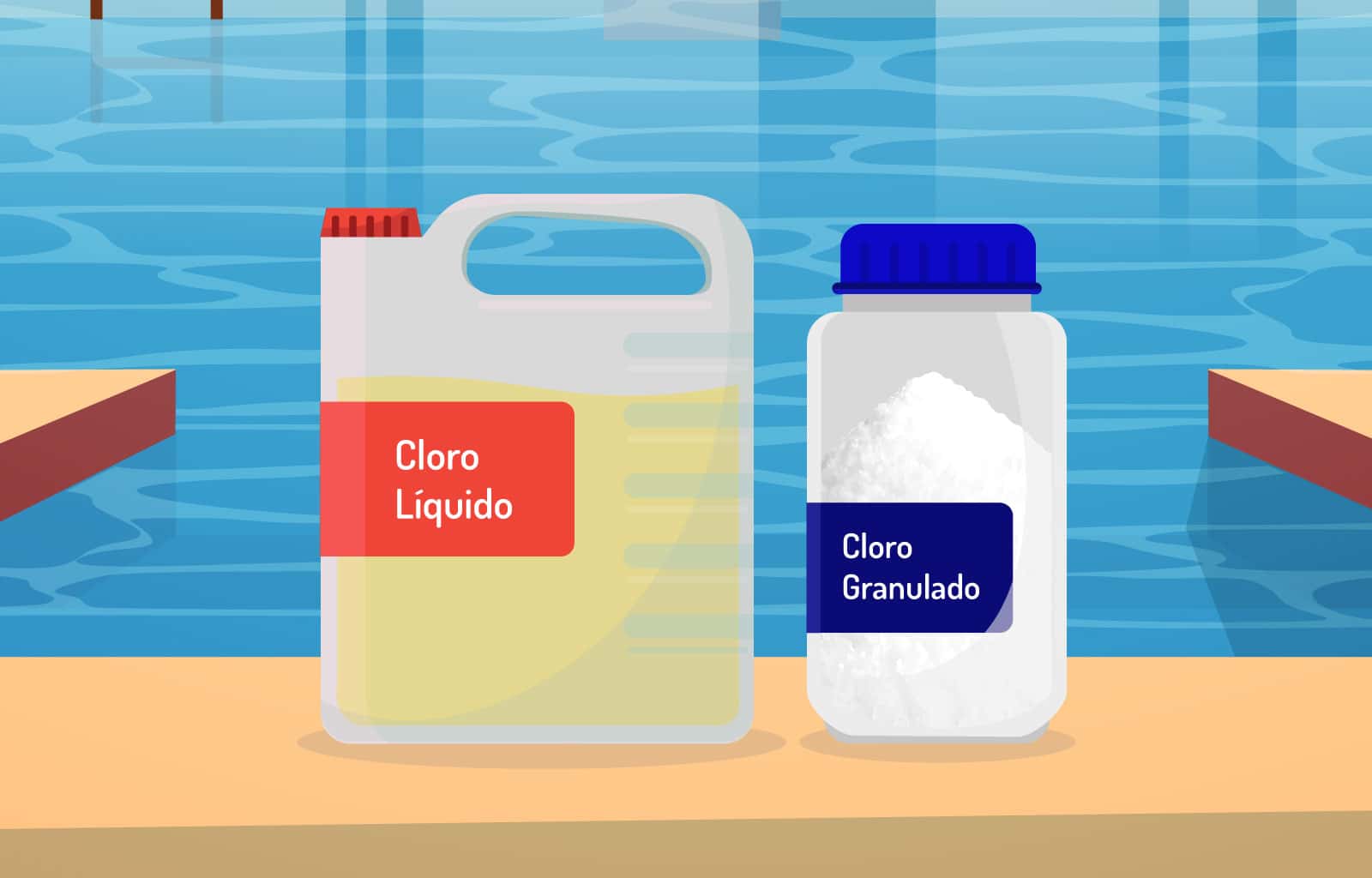
Discover the advantages and disadvantages of liquid and granulated chlorine, and find the best option for your pool.

Conductivity in Swimming Pool Salt Chlorinators. Find out how low temperatures can affect its performance and the causes.
Seleccionar categoria