Salt Chlorinator technology has revolutionized the way we maintain our pools and, today, they are universally used in pools all over the world. They are used in the 5 continents in private pools as well as in public pools.
However, there is one crucial factor that often goes unnoticed: the conductivity of the water.
In this blog post, we will explore how low temperature can affect the conductivity in swimming pool salt chlorinators and the reasons behind the decrease in this essential parameter.
The conductivity of water refers to the fluid’s ability to carry electric current.
In the field of salt chlorinators, conductivity is vital as it directly influences the efficiency of the electrolysis process, by which chlorine is generated from the salt dissolved in the water.
A chlorinator needs dissolved common salt (or dissolved salts) so that the electric current applied to the blades of the cell, generate the electrolysis process and effectively dissolve the salt (NaCl) in hypochlorous acid (natural chlorine generated by the salt chlorinator).
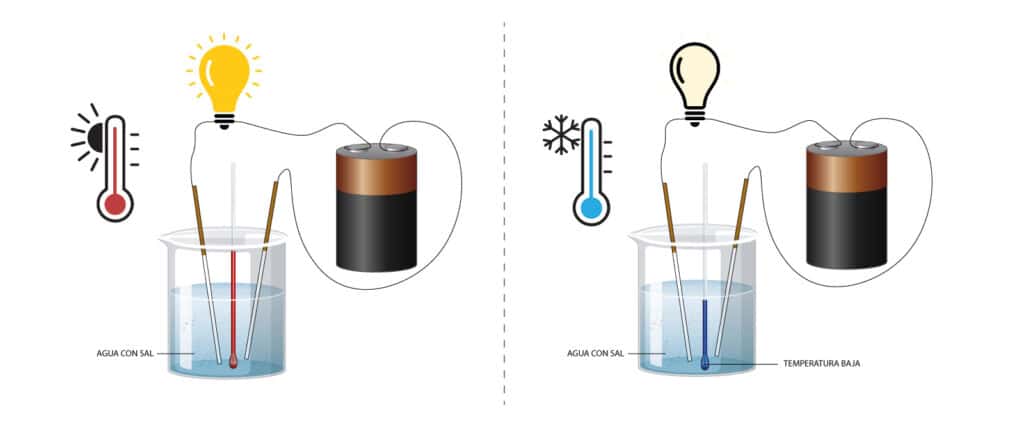
Water temperature plays an essential role in conductivity.
At lower water temperatures, usually in early autumn, conductivity decreases due to a physical effect. At lower temperature and lower conductivity, the salt chlorinator will have to increase its intensity on the blades, which will drastically shorten the life of the chlorinator cell.
Some salt chlorinators, with “salt” measurement on the display, will start generating “low salt” signal, when in fact it is low conductivity (the salt level remains the same, but the lower temperature makes the conductivity lower).
The “Low Salt”, “Low Salt”, “Low” message that appears on the chlorinator displays during the fall and winterizing, has to do with the equipment detecting lower conductivity and interpreting it as low salt, when this may not be the case.
The decrease in water conductivity at low temperatures can be attributed to several factors:
Reduced Molecular Movement: At colder temperatures, water molecules move more slowly, which limits their ability to transport charged ions, essential for electrical conductivity.
Decrease of Free Ions: Cold can affect the dissociation of salts into ions, decreasing the concentration of ions in the water and, therefore, the conductivity.
Increased Resistance to Electrical Flow: At low temperatures, the electrical resistance of the water increases, which hinders the passage of the electrical current necessary for electrolysis.
This graph, which shows the relationship between water temperature and conductivity of ultra-deionized water (ultra-distilled water) clearly shows the relationship between lower temperature and lower conductivity.

In this case, even with distilled water, the difference in conductivity of water at 15°C and 30°C is extraordinary: while at 15°C, the conductivity ≈ 0.03143 µS/cm, at 30°C, the conductivity ≈ 0.05101 µS/cm, i.e., the conductivity drops to almost 40% between 30°C and 15°C.
As previously mentioned, the decrease in conductivity due to low temperatures translates directly into lower efficiency of the salt chlorinators.
Not only will we obtain less chlorine produced by electrolysis, but the salt chlorinators compensate for this “lower conductivity” by inducing a higher electrical intensity on the blades, which drastically shortens the life of the salt chlorinator electrode.
The PoolComet expert’s recommendation is that, “when the water temperature drops below 16ºC, the salt chlorinator should not be used. When the temperature drops, the electrodes should be cleaned with specific products to remove the lime accumulated during the summer, dry the cell and store it in a dry place to have it ready for the next season. The reason is that not much chlorine is needed at low temperatures (algae do not proliferate below 15ºC), and on the other hand, the blades of the chlorinator will not be forced to work during the winter, prolonging its useful life”.
If you have any questions about your pool, please do not hesitate to contact us via WhatsApp and we will be happy to help you.
PoolComet choice
 Select options
This product has multiple variants. The options may be chosen on the product page
Select options
This product has multiple variants. The options may be chosen on the product page

Choose the perfect removable round pool for your space. Explore materials such as steel, wood or resin, and discover sizes adapted to every need and number of users. Learn installation and maintenance keys to enjoy the summer with the best option. Experts guide you.

Looking for a space-saving pool? Explore our guide to small removable pools for garden and terrace. Discover compact round, wooden or oval models. We help you choose according to your space and enjoy easy installation and maintenance, ideal for your home.
This Christmas transform your water oasis into a festive setting with these creative winterizing pool decorating ideas.
Seleccionar categoria