Knowing how to prime a pool pump correctly is essential for the filtration system to function normally. When a pump is not primed, it does not draw water, loses flow, makes noise and may overheat or stop due to thermal protection. If the problem recurs, it usually indicates air ingress, poor sealing or pump wear.
As professionals in maintenance and sale of pool pumps, we explain how to perform manual priming, what changes when the pump is elevated, how to purge the installation and why a pool pump is de-primed. We also tell you when to stop insisting and replace the pump with a new one.
Priming a pool pump consists of completely filling the pump body and suction pipe with water to remove air. Centrifugal pumps do not draw air and need water to generate the vacuum that moves the circuit.
To prime a pool pump professionally, follow the steps below:

When the pump is above the water level, priming requires more attention because gravity does not help.
Our professional recommendations are:
If the pump breaks down, the problem is not priming: it is air ingress or leakage. The most common causes are:
Signs that will indicate de-priming are constant bubbles in the prefilter, the prefilter not filling completely, hollow noise, gurgling and loss of pressure after switching off or on.
Priming does not solve the problem if the pump is de-primed every day, there are persistent internal or external leaks, the pump body is deformed, the motor seal is damaged or the pump is old and has lost its tightness.
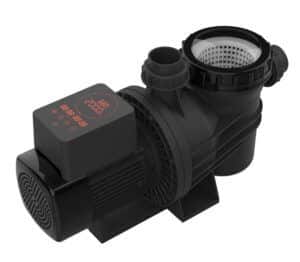
In these cases, insisting only leads to overheating and major failures. It would be time to replace the pump with a new one. At PoolComet we recommend the ESPA range of Swimming Pool filtration pumps. Specifically:
Turn off the pump, open the prefilter, fill it completely with water, check and lubricate the o-ring, close it tightly and start with open valves. Purge the filter if necessary.
Because air enters the suction or there is a leak (o-ring, cover, fittings, low level). Priming is not the cause; it is the symptom.
It ensures total sealing, fills the prefilter several times and purges the air. If it is often unbrazed, check suction and joints.
Yes, for a few seconds. If they continue, it indicates persistent air and the system should be checked.
No. The pump should not run without water; this will damage the seal and the motor.
Yes. Over the years, o-rings and body become less tight, and priming becomes unstable.


PoolComet choice
 Select options
This product has multiple variants. The options may be chosen on the product page
Select options
This product has multiple variants. The options may be chosen on the product page

When your pool pump starts and stops, the risk of breakdown is high. This maintenance guide reveals the causes: overheating, lack of flow, electrical faults. Learn how to diagnose and troubleshoot the problem, and decide when it's time to repair or replace with a modern, reliable pump.
Effectively remove black algae from your pool with our simple and effective techniques. Keep your pool crystal clear and enjoy the summer to the fullest.

Green algae in swimming pools with salt chlorinator. Discover the causes of this very frequent problem in swimming pools and how to solve it in a simple way.
Seleccionar categoria