

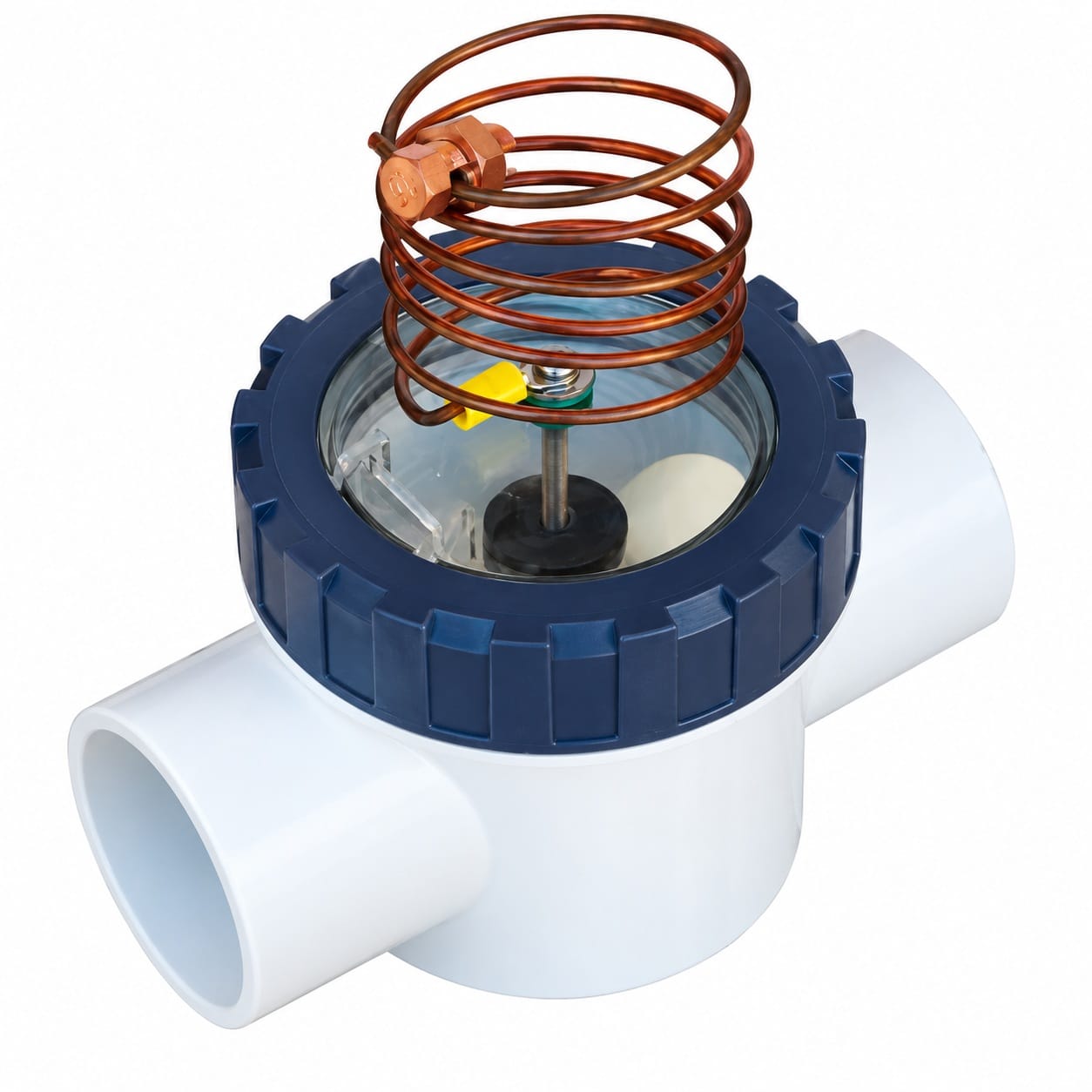
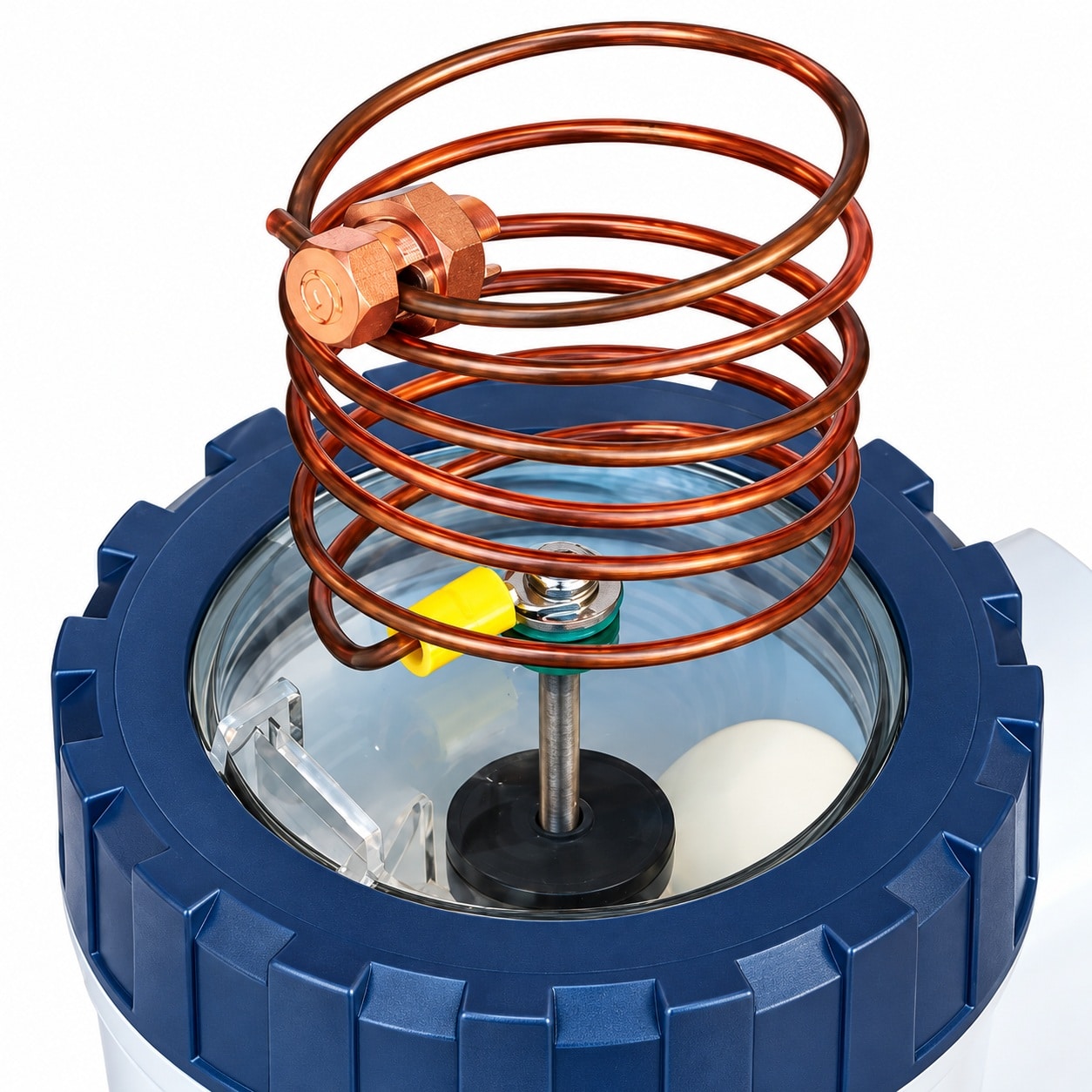





Sacrificial anode for a swimming pool. The zinc sacrificial anode is a device designed to protect the metal components of the pool against electrolytic corrosion. It is especially useful in pools with salt chlorinators and those made of fiberglass, where lack of proper grounding can increase the risk of corrosion and electric shock.
Installing a sacrificial anode creates a protective barrier that diverts corrosion to the anode instead of affecting components such as stainless steel ladders, heat exchangers, heat pumps, lighting niches, and other metal elements submerged in water.
What is a sacrificial anode?
Corrosion occurs when a metal gives up electrons in the presence of an electrolyte (water or moisture), degrading over time. The sacrificial anode, made of a more reactive metal (such as zinc, magnesium, or aluminum), is connected to the metal or material to be protected.
In this process, the anode acts as the material that is oxidized first, releasing electrons and “sacrificing” itself in place of the parent metal. This stops corrosion on the protected metal, which becomes the cathode of the system.
Benefits and Functionality
✅ Limits electrolytic corrosion in metal parts of the pool such as ladders, handrails, water features, etc…
✅ Protection against electric shock, especially in ungrounded fiberglass pools.
✅ Long life due to its high purity zinc alloy.
✅ Easy installation in 63 mm (2″) pipes by means of in-line connection. For 50-mm pipes, a 63-mm-to-50-mm adapter (not included) can be used to install it in line in any pool.
✅ Compatible with salt chlorinators and traditional chlorine-based disinfection systems.
Technical Specifications
- Material: Pure zinc anode
- Connecting cable: Solid copper, 1 m, 8 AWG
- Working pressure: Up to 4 bar
- Housing: PVC with a transparent lid for inspection
- Installation: In line on 63 mm (2”) pipes. 50-mm-to-63-mm conical reducers can be used in swimming pools with 50-mm pipes.
- Lifespan estimation: Approximately 3 years, depending on water quality and corrosion level.
- Mode of Operation: Once installed, the sacrificial anode gradually wears away rather than allowing corrosion to affect other metal elements in the pool. It is connected to the grounding of the filtration system to ensure effective protection.
It is advisable to inspect the anode periodically and replace it when at least 50% of its material has eroded.
Maintenance and Replacement
- It is recommended to check the condition of the anode every 6 months.
- Replace it when it has lost more than 50% of its volume.
- Maintain the ground connection in good condition to ensure its effectiveness.









Reviews
There are no reviews yet.