Water disinfection is a key task to ensure that the pool is safe and free of bacteria, algae and other microorganisms that can be harmful to health.
While chlorine is still the most commonly used method of pool disinfection due to its simplicity of use, low cost and broad bactericidal spectrum, it is still the most widely used method of disinfecting the pool. broad bactericidal spectrumthere are other methods available that can be equally effective and less aggressive to the skin and eyes.
Whether you have problems with skin hypersensitivity to chlorine or bathers with atopic dermatitis, or you are looking for a more natural method of disinfecting your pool, in this article, we will explore some of the non-chlorine water maintenance methods available on the market, and evaluate the pros and cons of each.
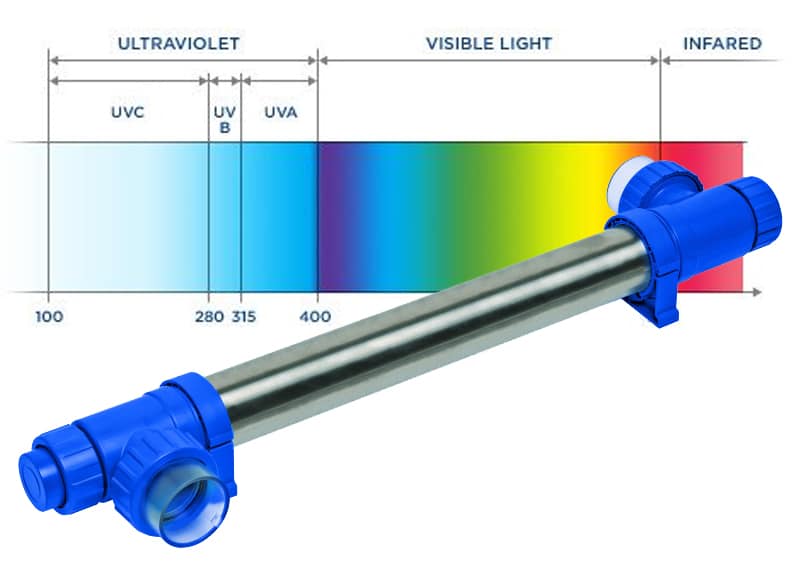
The treatment of the pool with ultraviolet light (UV) is a widespread form of water disinfection. The UV disinfection system uses a lamp that emits UV-C radiation, which destroys microorganisms by breaking down their DNA. Unlike chlorine, UV treatment does not produce chemical by-products and does not irritate the skin or eyes.
It is highly effective against a wide variety of microorganisms and in addition, in certain specific equipment, it is capable of oxidizing residual chloramines in the water.
Because of their performance, ultraviolet systems can be the perfect complement to keep biofilm colonies at bay in swimming pools. In this laboratory articleThe combination of ultraviolet systems with chlorine is shown to be much more effective than chlorine alone.
Advantages: UV treatment is highly effective in eliminating viruses, bacteria and algae, and produces no chemical by-products. It is totally harmless for the bather, since the UV radiation is encapsulated in the equipment. It is fully compatible with other systems such as liquid chlorine, salt chlorination or hydrolysis, reinforcing their disinfectant action.
Disadvantages: UV treatment requires periodic change of the UV lamp of the equipment every certain hours of use (between 10,000-15,000h of use in high-end models or 4,000-6,000 hours in low range). In addition, this system always needs to be accompanied by a small level of residual disinfectant in the water, which can reduce chlorine consumption by 80%, but we will always be forced to keep some chlorine in the water.
If you want to deepen the knowledge of ultraviolet (UV) systems for swimming pools, we have a thematic article that you can read here.
The hydrodynamic cavitation is another non-chlorine disinfection method that uses pressure waves to kill microorganisms. The hydrodynamic cavitation system is composed of a pressure collector that allows micro bubbles to be generated when the pool water passes through it, which, when collapsing, generate water vapor pressure. This implosion generates high mechanical energy shock waves that remove the vast majority of harmful compounds from the water. All this without heating the pool water.
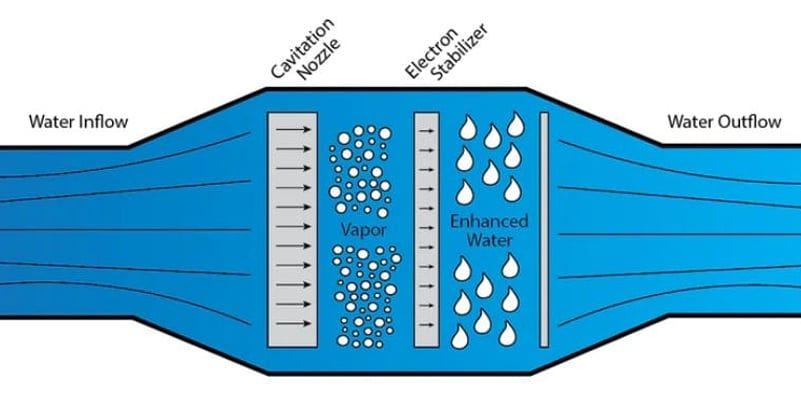
Thanks to its high effectiveness, hydrodynamic cavitation also helps to remove organic contaminants from the water and maintain clarity.
Advantages: Hydrodynamic cavitation is effective in killing microorganisms and removing organic contaminants from water. It has no maintenance costs as it uses no spare or wear parts. It is highly active against a wide range of microorganisms, including chlorine-resistant protozoa. Finally, it is an ideal solution in terms of eco-sustainability, as it has no by-products or pollution to water or the environment. In addition, it does not consume electrical energy and has no wear parts that require regular maintenance costs.
Disadvantages: The initial installation cost of the hydrodynamic cavitation system can be higher than other disinfection methods, although in the long term it can be a profitable investment due to its efficiency and low maintenance cost. Additionally, the system requires longer water filtration cycles than other systems to allow the pool water to be filtered more frequently.
The hydrolysis is the disinfection format with the most promising future from the point of view of efficiency and eco-sustainability. Hydrolysis is a totally ecological disinfection process in which, by passing the pool water through the electrolytic cell, it decomposes the water molecule (H2O), generating oxygen hydroxyls with a much higher disinfection and oxidation power than chlorine.
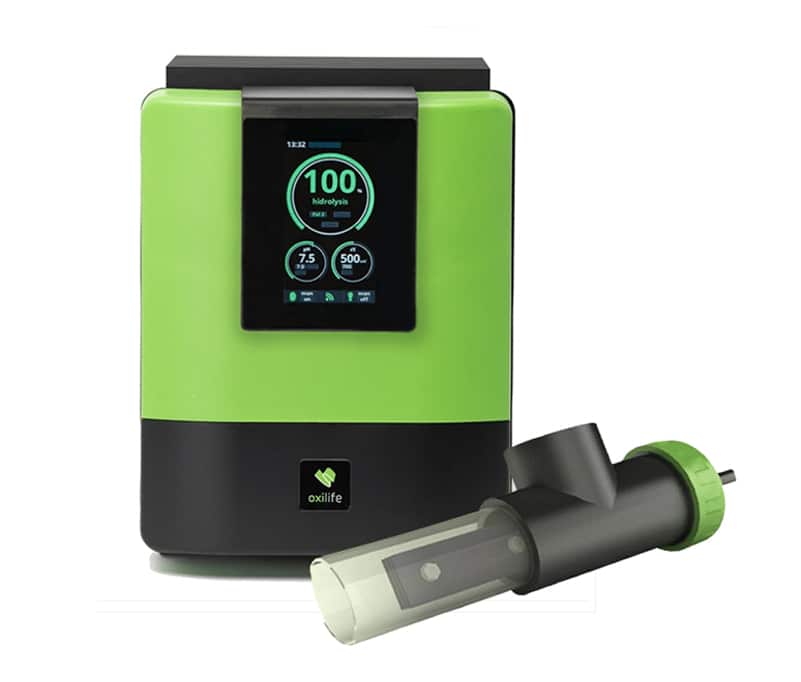
If to this system we add a very low amount of salt to the water, at the same time that it generates the oxygen hydroxyls, we will produce a small dose of residual chlorine in the water.
Advantages: Hydrolysis is effective in killing microorganisms and removing organic contaminants from water. It is compatible with copper-silver ionization systems such as the one discussed below. In some cases where the water already incorporates mineral salts, it is not necessary to add salt to the water. In addition, low salinity electrolysis equipment adds the advantage of the residual chlorine generated from the salt to the advantages of water hydrolysis.
Disadvantages: The hydrolysis system can be more expensive to install and maintain than other disinfection options, and may require a greater amount of energy to operate compared to other non-chlorine methods. In addition, the replacement cell may be more expensive than other systems when it needs to be replaced.
The copper-silver ionization is a disinfection and flocculation method that uses copper and silver ions to kill microorganisms in water and maintain water transparency.
The system works by releasing very small amounts of copper and silver ions into the pool water, which kill microorganisms (copper) and allow for additional water clarity (silver). Copper-silver ionization also helps reduce the need for additional chemicals and maintain water clarity.
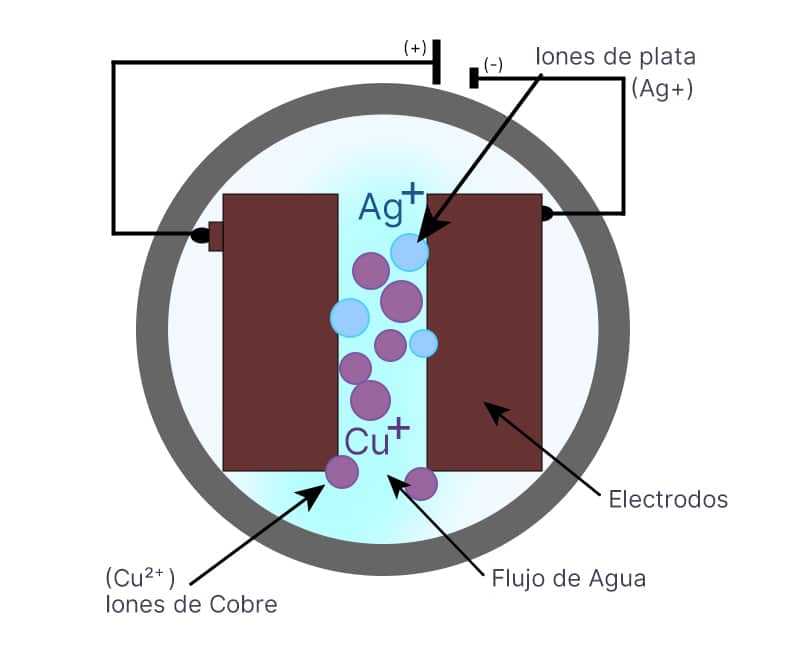
Copper-silver ions are a highly effective system against legionella. In pools with heated water (spas, hot springs, heated pools), copper-silver ionization systems are the safest way to prevent the proliferation of Legionella colonies.
Advantages: Copper-silver ionization is effective in destroying microorganisms and reducing the need for additional chemicals. It is the most effective system in pools with chronic algae problems. It promotes water transparency in a constant and natural way, so it can be the best method of disinfection for pools with a tendency to turbidity. It does not modify the pH of the water.
Disadvantages: The system can be expensive to install and maintain than other non-chlorine disinfection methods. In addition, the excess copper ions can cause staining of the pool surface, discolor some hair dyes or swimwear, and is incompatible with certain types of pools (such as those made of liner, reinforced pvc liner or fiber).
If you would like more information about copper-silver ionization systems, we have an complete article that you can read here.
The low-salinity salt chlorination is a disinfection method that uses a small amount of salt to produce chlorine in the pool. The system works by generating chlorine from the salt present in the water, eliminating the need to purchase and add chlorine to the pool. Salt chlorination also helps maintain water clarity and reduce skin and eye irritation.
In certain types of water with naturally occurring minerals, it is not necessary to add any amount of salt to the water, since, thanks to the natural conductivity of the water, the Low Salt chlorine generator is able to produce chlorine without adding minerals to the water.
Advantages: Low salinity salt chlorination is effective in killing microorganisms, maintaining water clarity and reducing skin and eye irritation . The low salinity salt chlorination system also offers the advantage of hydrolysis as a disinfection method.
Disadvantages: The system can be costly to install and maintain, and may require a greater amount of energy to operate than other non-chlorine disinfection methods. In addition, salt in the water can damage certain types of pool surfaces and equipment.
There are currently several “non-chlorine” pool disinfection methods available on the market. Each has its own pros and cons, and it is important to choose the method that best suits your pool’s needs and your budget.
If you are looking for a method of pool disinfection without chlorine, please contact us without obligation to determine which is the best option in your case.

PoolComet choice
 Select options
This product has multiple variants. The options may be chosen on the product page
Select options
This product has multiple variants. The options may be chosen on the product page

Dye for urine in swimming pools. Find out if it is true that pool water changes color with urine or if it is just an urban legend.

Discover the deepest pool in the world. With 60 meters deep and a breathtaking underwater environment that emulates a ruined city, it is a paradise for diving enthusiasts and a once in a lifetime experience.

Discover the incredible health benefits of Finnish sauna and Turkish bath at home. Improve your physical and mental well-being with these natural therapies.
Seleccionar categoria